One Pager Ideas
A one pager asks students to show what they learned about a book, unit or topic on a single sheet, mixing key quotes or facts, images and their analysis. The best one pager ideas give students one clear focus, such as a character, a theme, a historical event or a science process, and a short list of required elements.
One pager ideas by subject
This page is about the classroom assignment. If you came for the business document, see what is a one pager. Every idea below gives students one clear focus; pair it with the requirements list in the next section.
English and reading
- A character study: how one character changes from the first chapter to the last, with a quote from each end.
- A novel's theme: one theme written as a full sentence, with two scenes that prove it.
- A poem's imagery: the three strongest images in one poem, drawn, with what each suggests.
- A short story's turning point: the moment everything changes, what led to it and what follows.
- An author study: five facts about the author's life and where one of them shows up in the writing.
- The argument of a nonfiction article: the claim, the two best pieces of evidence and one weakness.
- A book review for the class library: a one-line pitch, who should read it next and a rating with a reason.
History and social studies
- An event: who, what, when, where and why for a single day, anchored by a primary source quote.
- A person from the unit: three decisions they made and what each one led to.
- A primary source: a speech, letter or photograph, with what it says and what it leaves out.
- A period map: one era drawn as a map with five labeled places and why each mattered.
- Causes and effects of a movement: three causes down one side, three effects down the other.
- A court case: the question before the court, each side's argument and the decision.
Science
- A process: photosynthesis or the water cycle drawn as a loop, every stage labeled.
- A cell or organ: a labeled diagram and what goes wrong when one part fails.
- An element: its place on the periodic table, its properties and where students meet it at home.
- An ecosystem: a food web with producers, consumers and decomposers.
- A lab report summary: the question, the hypothesis, the result and one source of error.
- A scientist: one discovery, how it was made and what it changed.
Math
- A theorem or formula in words: what each symbol means, with one worked example.
- A problem-solving strategy: working backward, drawing a diagram or making a table, shown on one problem.
- A concept in daily life: ratios in a recipe, percentages in a sale, slope on a ramp.
- A mathematician: one idea they introduced and a problem it helps solve.
- A unit review: the five rules of the unit, each with a quick example.
Other subjects and the first week
- An art movement: its main ideas, three typical techniques and one work sketched from memory.
- A musician or composer: their era, their sound in three words and one piece to listen to.
- A health topic: sleep, hydration or screen time, with one change a student could make.
- A culture page for a world language class: greetings, a festival, a dish and ten new words.
- Classroom rules: the agreements the class wrote together, made into a poster.
- An all-about-me page in the first week: interests, a goal for the year and one question for the teacher.
- A podcast or documentary takeaway: the main claim, the strongest moment and one question it raised.
What to require on every one-pager
Copy this list onto the assignment sheet. It works for any subject; in science and math, key facts or steps take the place of quotes.
- The title and author, or the topic
- Two quotes, or two key facts for science and math, with where each comes from
- One symbol or image for the main idea
- The theme or main idea in one sentence
- Two or three sentences of analysis
- A connection to your life, another text or current events
- A border or color scheme that means something
- The whole page used
How to assign a one-pager
- Show a finished sample. A finished page shows students what you expect, so nobody has to guess at the standard. A sample made by you, or a past student's with permission, works best.
- Hand out the requirements. Print the list above at the top of the sheet so nobody has to remember it.
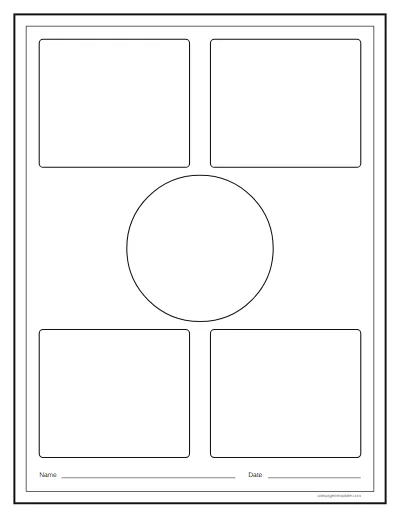
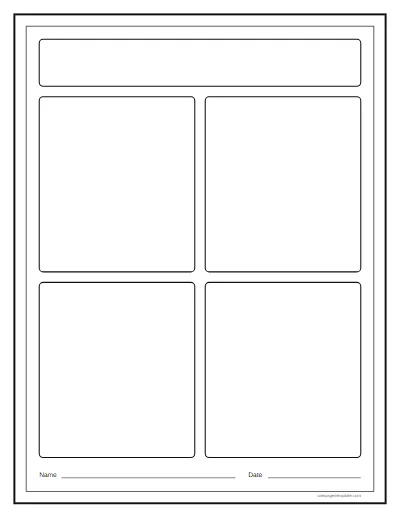
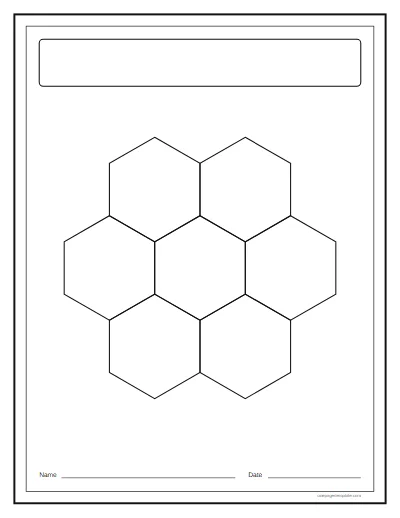
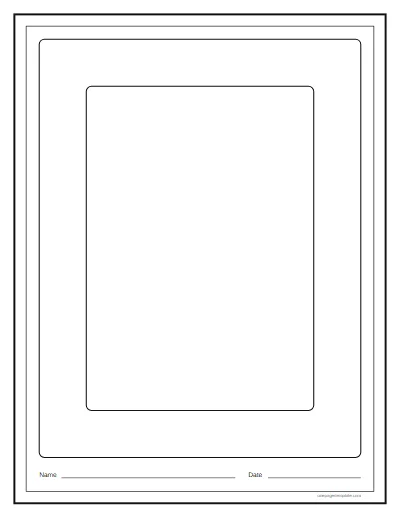
- Offer a printed layout. Boxes and a border save planning time and help students who freeze at a blank page. There are eight to choose from in the one pager layout ideas.
- Set the time. One or two class periods suits most one-pagers, or one period plus time at home.
- Hold a gallery walk. Put the finished pages up around the room and let students read each other's work with a question to answer as they go.
- Grade with the rubric. Score the thinking against the requirements, not the drawing.
A rubric you can use
Six rows, four levels. Score each row from 4 to 1 for a total out of 24.
| Criterion | 4 (Excellent) | 3 (Good) | 2 (Developing) | 1 (Beginning) |
|---|---|---|---|---|
| Required elements | Every required element is on the page and easy to find. | All but one required element is on the page. | Two or three required elements are missing. | Most required elements are missing. |
| Quotes or facts | Two well-chosen quotes or facts, each with its source. | Two quotes or facts; one source is missing or one choice is weak. | One quote or fact, or quotes with no sources. | No quotes or facts, or they do not fit the topic. |
| Analysis | Explains why each quote, fact or symbol matters, in the student's own words. | Explains most choices, with a few general statements. | Mostly summary, with little explanation. | No analysis, or it repeats the text. |
| Symbols and images | Every image or symbol connects to an idea, and the link is explained. | Images connect to ideas, but one link is unclear. | Images are decoration with weak links to the ideas. | No images or symbols. |
| Organization | Spaces are planned, readable and in a clear order. | Mostly clear, with one crowded or confusing area. | Hard to follow in several places. | No clear order; hard to read. |
| Use of the page | The whole page is used, including a border with meaning. | Most of the page is used; the border is plain. | Large empty areas. | Much of the page is blank. |
The same rubric, with the requirements list and a name and date line, is on the printable project sheet: a PDF and Word download among the one pager layouts.
Helping students who say they cannot draw
Say it early and often: ideas are graded, not art. A symbol can be a simple shape with a label. Word art, a labeled diagram, an arrow chart or pictures cut from old magazines all count. A printed layout takes away the worry about where things go, and a sample you make with stick figures and arrows shows the class that the thinking is the point. The six classroom design ideas in one pager design, such as a border that repeats a key word, need no drawing at all.
Digital one-pagers
Google Slides or Google Docs both work once the page is set to Letter, portrait. Students add text boxes, shapes and images, then share the file with you. Ask them to keep text at a size that would still read when printed, since slide apps start with large default fonts. If your class prints, the Word and PowerPoint files on the blank one pager template page give an empty page that is already the right size.
Printables
- Printable layouts: eight layouts with borders, plus the project sheet with this rubric.
- Blank sheets: empty one-pagers to print or to type into.
Here for a business one-pager instead? Start with the one pager template.
Questions
What are good one pager ideas for students?
Pick one clear focus a student can cover on a single page: a character or theme from a novel, a poem, a historical event or person, a primary source, a science process such as the water cycle, a math formula and where it shows up in real life, or a documentary they watched. Then list the required elements.
What should students write on a one pager?
Short, specific writing: a one-sentence theme or main idea, two or three sentences of analysis that explain why a quote, fact or symbol matters, and a connection to their own life or another text. Labels and captions count too. Keep full paragraphs out; the page is for sharp lines, not an essay.
Can one pagers be used in math or science?
Yes. In science, students can map a process such as photosynthesis, explain a lab result or profile an element. In math, they can state a formula in words and symbols, show a worked example, and sketch where the idea appears in daily life. Swap the quotes requirement for key facts or steps.
How do you grade a one pager?
Grade against the requirements you set, not drawing skill. A simple rubric scores required elements, the quality of quotes or facts, the depth of analysis, how well the symbols fit the ideas, and how the page is organized, each on a four-point scale. The rubric above and the printable project sheet use those rows.
How long should students get to make a one pager?
One or two class periods suits most one-pagers, or one period plus time at home. A one-pager that reviews a single lesson can fit in part of a period. A printed layout saves planning time, so offer one when time is short.
How do I help students who do not like to draw?
Make clear that ideas are graded, not art. Let them use simple symbols, shapes, word art, labeled diagrams or pictures cut from old magazines, and give them a printed layout so the page is already organized. Show a sample made with stick figures and arrows so everyone sees it is about thinking.
Can students make a one pager on a computer?
Yes. Google Slides or Docs work well once the page is set to Letter, portrait; students add text boxes, shapes and images and share the file. If your class prints, the blank Word and PowerPoint templates on this site give an empty page with the right size, with no sign-up needed.